Juan Lopez
The migrating, working childhood.
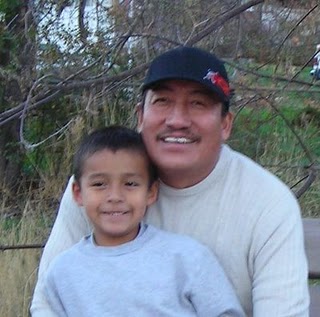
I am Júan López and this is my life story. I was born in the “Big City” which is Tenochtitlán or now Mexico City; but only born there. I was raised in the village of Chichén in the Yucatan Peninsula for most of my childhood years. I have six brothers and six sisters with me being the eldest male. My parents and grandparents, except for one, are of Mayan descent and I grew up speaking Mayan Yucateco. Chichén is a small village and my community was composed of other villages as well that were very close together, about 5-10 miles away from each other. In each village there were about 15-20 families living there. We were also very close to each other personally. Sharing amongst each other was very common and is something I vividly remember. Parents went hunting together, would share “la cosecha,” (the harvest) and organized special events. When there was a party in a house, there was party in the entire village because everyone knew each other. The big festivities are some of the happiest moments that I always like to remember. I remember in detail las bandas (the bands), the excellent food and all the kids playing, all as a big family.
During my childhood I used to enjoy playing canicas and trompo (marbles and top) with all the kids and if it wasn’t that we would make our own toys. It was very different from what kids play with now. I even called my machete a toy which allowed me to cut grass for planting; that’s when playing became work. I really liked my first jobs where I learned a lot of skills. My very first official one was as a helper in a bakery. My father and I started out supplying fire wood for the bakery, and then I started doing more by cleaning, taking care of the oven, and making sure everything was ready for cooking. Later I was sent to sell the bread at the village and that way made some extra money. However, I still saw the need for me to contribute more and wanted to work on my own.
At the age of nine I took the decision to move away from my beloved village to the city of Merida Yucatan. I stopped going to school, left my family, and traveled to the city. I saw the need for me to start working for extra money and landed a job at an open air supermarket to begin. What I would do was help people, especially the ladies to carry their food bags to their cars. Many want to go to the city because it sounds great and has more opportunities, but it is very difficult. I learned the hard way by having to sleep in the streets, under the bridge and at house floors. But, I never stopped and continued my journey.
Next stop for me was the beaches of Cancun. I took a long bus ride to get there, and it was all worth it. I still remember it like a dream, the white sand and blue crystal waters. There were not as many hotels as there are now over-populating the beaches. Regardless, there was good tourism and I was able to prosper financially selling a variety of goods. I used to sell puppets, masks, ceramics, and jewelry to people from all over the globe. This is where I have my first encounter with a lot of diversity. “I met all kinds of people from Canada, United States, from England, Ireland, from all different parts of Europe, the world rather.” It was challenging at first because I did not speak their language. However, soon enough I taught myself English by practicing constantly with the tourists and making business as well. When tourism was slow, I went into different things like free markets, selling aluminum, and even sewing. I learned quickly and became a tailor at the age of thirteen. I was skilled to the point where I was able to sew shirts for men. It became a more stable job for me that allowed me to keep only one job with decent pay. Later at the age of fourteen I had my own shop. No matter what, I always found something to do and was able to survive the cold nights with no shelter and hard times with no food. I moved on along the coast.
It was all an adventure traveling up and down along the coast and I loved it. I ended up working and passing through Islas Mujeres, Playa Del Carmen, Celestún, and even as far as Acapulco. I continued with the beach business and as usual found my ways around other jobs. I stayed in Acapulco for three years and then moved to the beautiful Puerto Vallarta. So beautiful that I even met the love of my life there. We decided to get married there and start a new life together.
Moving to the United States
I made the decision to move to the U.S in 1997. My wife was already waiting for me in
Soon after I came to
After a storm of personal problems, I decided to continue to challenge the system and help my family move forward. I moved with my family to my current neighborhood at Hartland about four years ago. It is here where most of my leadership and community involvement have developed. In addition, this is the most diverse place I have ever lived. I have neighbors from all over the world around my apartment floor; one is Mexican, the neighbor upstairs is Turkish, the one above him is Bosnian, another one up there is Sudanese, and the one next door is Puerto Rican. I talk to all of them and I always say hello as I was taught, no matter the type of response. I have come to appreciate all the cultures. I have learned so much from the people around, and have gotten to know them through many of our community events and gatherings. For that and other reasons, I decided to become a resident committee leader and help in organizing events and staying up to date and spreading the word about our many programs to all the residents.
My Contributions at UNP Hartland Center
I feel lucky to live in a very organized community full of resources and with the presence of the University Neighborhood Partners (UNP). In the beginning I remember how the outreach efforts on behalf of UNP were not very successful. To be honest, I did not trust them. It’s not easy to earn the trust of people in a very diverse community because even with my own people of whom I think I understand a bit, it’s difficult. I’ve been proving myself for the past three years now, and I’m just seeing a little bit of the trust coming in. They come all the way into my house, they knock on the door because they ask me questions of what they should do, or what they could do, or what is best to do, or where to go, and then with all the excitement and happiness, I would send them to the Center. I tell them we have all the information you need right there, and if they need more, we’ll get it for them. It’s exciting to be doing something like that for your community.
Just as I had done in my previous community, I still help people with translations, filing out applications, getting money orders, and paying bills. Only this time I strongly encourage them to take ESL classes. I teach classes here myself, because I want to ensure that everyone gets the opportunity to better themselves and learn English, so they can do their own things. I recently began teaching in the beginning of fall of 2008, and I do it every Saturday in the Harland center at the community’s convenience. I encourage all the residents to come, and I tell them that there is “no excuse that you don’t speak English anymore, no excuse. I speak Spanish. I speak English. I will translate for you. I will be there with you if you want, but you know what, let’s make this together.” English classes are free. I want everyone to succeed in life.
I enjoy to be constantly updating the community about everything available in Hartland and I take that as a responsibility. Yet the thing that I enjoy the most and always brings me happiness is my interaction with the kids. I like to say that I am well known by most of the children living here as the bicycle man. “I like to take them bicycle riding, which is their favorite, and fixing the bikes for the kids too. I take it as a hobby. I make it a hobby because that’s one way to get the attention of the kids and that way I could more or less remind them that manners exist, that you have to respect people and things like that. I take them bicycle riding because their parents let them, because they trust me.” I take the opportunity to teach them good things that I know will help them. Through the children I have a way to get to the parents and get acquainted with them. Children bring so much life.
I value education very much, and I want my son Chuy to take advantage of the many great opportunities offered. As soon as I heard of the Head Start program and that it was stationed in Hartland, I did not hesitate and signed up Chuy for it. In Head Start, I started to volunteer there for a while. I went there and read to the children in English and Spanish because we had English and Spanish speaking kids there, so it’s like I read one story in English and Spanish. The kids loved it and so I got myself involved in there. Whenever teachers needed any translation, they called me and I was there. The moment my son started going to Head Start, I got involved.
Now Chuy is going to Mountain View Elementary. I ask a lot of questions, and I talk to teachers. I talk to everybody there. They thought that they saw in me something that they needed in school to get parents involved, so they invited me to get involved there in the Parent Teacher Association (PTA). I shied out of it for a while, but one day this lady kept bugging me and bugging me and I say ok let’s see how the people will accept me. I went to one of the meetings, and I found out that I knew most of the people because I was already here working with the community and organizing all kinds of stuff here being part of the Hartland Resident Committee. We had been taking them out to UNP Picnics in the Parks and all that kind of stuff, so I knew most of the parents. The teachers and the principal asked me to join the PTA. They wanted me to be president of the PTA, and I said you already have a president. They said yeah, but this person is not attending the meetings. So, I asked the people, ‘Hey what do you people want?’ They answered, “Go for it!” I said okay, if the people ask me, I will. So they elected me president of the PTA.
Another motivator that encouraged me to take on the position is the fact that I want to represent the Latino population. There are a lot of Latinos here. I see the need --I feel it. Now in this position that I hold, I am starting to connect community and school. It is great that I am getting more people involved from school at the Center [Hartland], and from the Center at the school [Mountain View]. I inform and invite everyone to our community forums, health fairs, and multicultural celebrations. As a PTA president elect, I also started to challenge the parents to get more involved. I want to emphasize the importance of parental involvement in school because I know this is key for a child’s success. Even in school, the children know who I am! They recognize my presence. I am able to improve and facilitate communication between parents and teachers, and help them establish the relationship needed to follow the child’s progress. It is great that I am able to see the same people in my community in school. When I connect everything together, I can see it working. It is working, and I guess I want to keep it that way. I hope that there are no more changes going on here with this system because that breaks my heart.
My biggest mission here is to be an accessory coming from my community to combat the system. I definitely know that those in control don’t understand our immediate way of living, thinking, and they don’t know the reasons we’re here. Some of us are not here because of the children because some don’t have any, so the real expectations that are in place are something different than what my expectations are. My expectation is to be able to know and see that my child gets a decent education, that he gets that opportunity. Because every child deserves that opportunity to show and prove themselves, and I know that some children aren’t getting it. I believe that it is because some group of elites are thinking that only the children of plenty should have the opportunity to a better education, and I have written some words and songs about how that kind of thinking should be stopped immediately. Every child should get the opportunity and support because if they don’t, then they will be more likely to fall into the arms or rather the tentacles of crime and drug addiction. Of course, with all that comes poverty. Discrimination is also greater towards ethnic groups, it is happening and it is visible.
I’m proud of living here with my people because I could go out there and even the children know me. I could talk to anybody out there. I have that satisfaction that I am willing to give or to share the little bit that I have. It’s something that I have by nature because that’s one of the values that my mother taught me and at the same time it’s one of the values that I have put in practice in the community where I live: to share what I have with the rest of the people. In return I get smiles, I get hellos, and I get handshakes. When people go to the center and get involved then my satisfaction continues to grow.
My Cultural Values Before and Today
I am proud of who I am and will never forget where I am from. While I do have to confess that I have forgotten the Mayan language because I have not been using it a lot. I still remember the most valuable things taught to me. Part of my school was direct from my elders. I learned manners from them that I had to follow and respect. Anyone that was older than me, I couldn’t call “tu’ [you], I had to call them “usted” [formal you]. I had to obey any of my uncles because they were older than I was. There was always great respect.
My memories are filled with rich moments spent in my village with the sense of togetherness spread all around. The traditional activities were always fun and my favorite, and therefore I still do that here in
Now at Hartland I fully invest myself in coordinating community events. Due to the richness of the diverse population in my community the theme is always multi-cultural. The main attraction is always food from all over the globe. We have food from Bosnia, Mexico, Russia, Sudan, Vietnam, and many more. In addition we have music, we take pictures and we get to know each other. It is great and we are the ones that do it. I enjoy setting up these events very much because I have the chance to meet new faces, share my traditional foods, and my music.
Hartland is a changing community. One of the major reasons is that many people get placed here, especially refugees from Africa. I am fortunate to enjoy all the diversity around me. I have learned so much from the people around me. I was always taught to be a listener, understanding, respectful, and supporting without expecting anything in return. That is my philosophy. I like to help from the bottom of my heart and I will always do as much as I can, as long as I am permitted.
From a son to a father
My childhood only lasted so long. I had to start working at the early age of nine and was not able to play and go to an educational institution like other children do. However, I did have a school and that was my father. My father was considered the best hunter and best fisherman of the village, and for that he was my hero. He taught me how to clear the land, till the soil, plant the seed, harvest the product, and later to hunt and fish. I learned everything a man needed to know in my village from mi papa.
I did not have many opportunities to spend time out with my father other than the learning moments, but the few times that I did, I was the happiest kid in the whole world. In our relationship there was always great respect, and communication was solid. One thing that I think about is that I don’t remember him ever telling me, “Son, I love you.” He never told me, but now I am sure that my dad did love me. Going through my memories I remember how much he took care of me when going on our adventures hunting and fishing. I remember sitting in the canoe with him when we would go alligator hunting because he used to sell the pelt, “el cuero”. In the river or lagoon at night, he would be sit sitting at the back, I would be up in the front and the shot gun in the middle. Then he would paddle and had his headlight flash the light all around the edges of the river. We would be in “el mero centro”-- right in the middle of the river, and he would be paddling gently, no noise at all. Then suddenly he would say whispering, “Pasame la escopeta” [“Pass me the shot gun”], so I hurried and knew how to handle the “escopeta”-- click it open, put a cartridge and pass it to him. Then I would lay in the canoe. When I see he put the lights out, the red eyes and yellow eyes, then I would hear a bammm! When you shoot those alligators, they go down and he would have to pull them up. That was one of the only times he took me with him. It hurt me when he wouldn’t take me hunting and fishing but now I understand that he did that for protection; that was his way to show his love.
I know that back home in
I want education to be at the top of the list for my Chuy. I want him to take the opportunity to go to college, grow, and graduate. This is one of the most powerful reasons I am staying here. But I also want to go back home someday and I want to teach him what I know because I want him to remember the values and ways of his root ancestors.
