Ruby Chacon
Growing up on the East Side
Ruby’s father took Ruby’s mother out of the west side and into the east side of Salt Lake City. Here Ruby shares her experiences of growing up on the east side and of the few minorities in Salt Lake City.
“I grew up in a house in the sugarhouse area by the freeway and actually my mom grew up in the west side and my dad, see there is a perception of the west side even since then because my dad wanted to move my mom from the so-called “bad west side.” We were pretty much the only people of color; there were few other families of color in the neighborhood. I had a really big family. I had my community in my little house but I didn’t really have an outside community - I didn’t have a community in the school.”
“We were not part of, you know, the [LDS] church. We were poor [and] my mom was actually a single mom and she would have to work full time; there were six of us. And we’d get help from the LDS church as well. So we had a relationship with the bishop in our neighborhood but we weren’t Mormon and the more that they would help us the more pressure my mom would get to send us to church. So I remember the one time my mom sent us to church and I remember feeling just out of place - like we didn’t have the nicest dresses, you know we had second hand dresses (laugh at past) – and not feeling like we fit in. And then [my mom] only sent us there one time, and then the more [her bishop] pressured her to baptize us that is when she sent us to Catechism and just kinda said “I can’t, we are catholic”. And so she would just work for the church in exchange for food. Because we couldn’t - she, she was just too Catholic. She would never never make us change our religion. I think the more she got pressured the more she decided that we’d-she’d make us get more involved with the Catholic Church. So it was kinda’ like that, we had like I said, I think it was more my community was in my little house rather than outside because we just never really fit in at all.” “I think a lot of those families lived down on the west side and I think people probably, I think it was just fear, just because of difference. That’s the other experience that we had growing up, and I think my mom had growing up too. Because there where so few minorities, we kinda added to each other and we congregated together and even though our family lived on the east side we pretty much knew all the people of our age group. Not, not through school but just by parties and different things like that. And my mom was the same way; every time I would bring somebody home, a friend, somebody of color, especially Chicano families, the first thing she would ask is “who is your family?” or “who is your mom and dad?” And if they grew up in Salt Lake she always knew them because my mom, I mean there where very few minorities and they all pretty much knew each other in some way. They probably lived next to each other and then just moved - started separating, just like my dad moved my mom out of the west side. Things started moving out and minority populations started growing little by little, and now it’s way bigger than I ever could’ve imagined. I don’t know where you’re from, it’s probably all-relative, probably they are not from your point of view of somebody from another state. From my perception it has grown quite a bit, and it feels good.”
Ruby and Education, the struggle and challenge
Ruby had immense struggles in her educational aspirations. A lack of support and constant discouragement from her high school counselor made it a struggle to continue on to higher education. However with support from college counselors, her husband, son, and own drive she was able to attain higher education.
“My counselor [in high school] always told me from 10th to 12th grade that I wasn’t going to graduate, and she’d always tell me every time I went into her office why I am - because I fell behind in ninth grade and so she would tell me I’m too far behind. And I would always try to do day school, night school, and work to get all the credits to try to catch up, and she just said it didn’t matter what I did I wasn’t going to graduate anyways. I used to go home crying, so I would try to just avoid the counselor and just prepare to listen to her and just stay in school, even though there were many times I just wanted to drop out because she kept, you know the words that she would tell me. (After graduation, Ruby went with her friend who moved away a year earlier to Santa Barbara). So when we went to Santa Barbara and she introduced me to this counselor, he was a Chicano counselor, I was still afraid. I had two jobs lined up and was going to go to school full time. I was ready for him to tell me why I couldn’t do it and just prepared myself mentally. But then he didn’t tell me any of the that stuff my high school counselor told me, and in fact checked up on me at one point. He called me into his office, which made me really nervous because I thought he was going to, you know, say something negative. He told me that he checked my grades and that he was really proud of me because I was doing really well and talked to my teachers. I was really amazed; I didn’t realize that was the job of a counselor, and he was actually pretty amazed too because when he was working with me he would tell me what I needed to do and I’d go do it. But he expected that he would have to help me and I expected that I would have to do it on my own and so he would always tell me the things I needed to do and I’d go do it and I’d go back and he’d be “well lets go do it” and I would be like “I already did it ‘cus you told me” and he would be like “you did? I was going to help.” So it was just a weird experience growing up here in Utah and the things I had to teach myself to do in order to get by. And then actually having somebody there to guide me - I was just not used to that, right? But the thing that was really important was that it gave me the vision that I could go to college because I saw myself and other students of color on campus. I had this Chicano counselor who was really doing everything he could to help me. I just never had that before. So when I came back here I just decided I was going to go to the community college.”
Blessings in Disguise, Moving to the West Side
Ruby was able to find a true blessing in disguise and true community when she moved into the West Side of Salt Lake City. She found community, communication, and a neighborhood she could call her home.
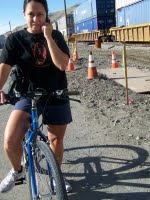
“We came here [Guadalupe Neighborhood], probably around the same time when we started the first Mestizo in 2002. That is also around the same time that we inherited our nieces. [Before moving to the Guadalupe Neighborhood] we lived in a two-bedroom apartment around the avenues and got all kinds of complaints because we had, at one time, five kids in one bedroom. So we lived on the third floor and our neighbor was not always very kind about it. My little niece, she’s just a little kid, would run across the floor so we would just constantly get complaints and we knew we had to move into a bigger place and so we looked everywhere. The west side was not an option at first, you know because of those perceptions, and I grew up with those perceptions. My dad moved my mom out of the west side, you know the “bad part” of Salt Lake, blah, blah, blah. But the most affordable places we could find were on the west side and Terry (Ruby’s husband) might have a different story, but for me I felt like I was forced to move in this neighborhood. The first place that we found was a three bedroom that we could afford, because we just inherited kids, were still building our careers, and just kept, we were just barely surviving. We couldn’t afford milk (laugh at the past). In fact Terry’s brother, he used to bring us food from the food bank, and it was just a big struggle because we just wanted to keep pursuing our careers and it didn’t help inheriting more kids that we didn’t anticipate, plus our son, and to have to pay more in rent, and you know what I mean? So the first place we found was where we live now, where we are buying now, because it was the most affordable. But I tell you it was a true blessing in disguise again, like our son. But it was a true blessing in disguise because it ended up being the best neighborhood that we could have ever imagined. We lived in the avenues for years and years and years and maybe would get to know maybe one neighbor, you know what I mean? But the first moment we moved here, we just got introduced to people and it was just like, “wow, people actually talk to each other in this neighborhood.” (laughter) I just, it was just the most amazing thing and then I remember the first night going to sleep and hearing the train and then hearing roosters early in the morning and I just remembered the stories. It brought back these nostalgic stories that my mother used to tell me about growing up on the west side that revolved around her experience with the trains and how she got around them. Then the roosters I’d hear, and just like, you know that experience of going to my grandfather’s farm and hearing those noises, it was like I felt like I came home, and I didn’t even know this was where my home was supposed to be. But that’s the way it felt. The first night I was there it just felt like “oh my God this is a great experience, just the sounds and the people.”
“We still live in the very same place we moved in to rent, and we are buying it now. It’s a duplex. I mean we get to know people a little more on an intimate level you know, rather than a friendly level. We hear the stories all the time of the woman who used to live in our house and about how Robert’s (Rendon) son Jonathan used to just walk in and she would give him collared greens or something like that. I mean we just know them on a more intimate level, it really just feels like family where we live. It’s great, I feel like it’s the family…not to say that my family is not, you know. It’s just a family that I discovered that I feel like, that has become part of my growth and my family’s growth and being a part of something rather than being apart from. When you asked me about the stories of growing up and the conflicts, I always had that conflict because we never fit in our environment in the context we lived. I feel like where we live now we do fit and we are part of new…almost just a new family. It’s just the greatest feeling. And it’s sad because my mom, (nervous laugh) she’s bought into everything that has ever been told about the west side and we fight ‘east side is better’ and I’m just like ‘no, west side is better’. The one time my mom spends the night at my house we have a drive-by shooting and I think oh crap now this is really going to give my mom ammo to you know, to… but no, I wouldn’t move back to the east side if I were paid, because it just feels like family here. I don’t know how else to describe it.”
The West Side Community; Goals and Hopes
Ruby hopes to see the west side community keep growing and the negative perceptions and fears of the west side dissipate so there can be continued growth in the neighborhood, community, and art. She also touches on her own goals for growth along with the community.
“My ideal vision would be more value and investment in our neighborhood, that the perceptions would dissipate (laugh), that the west side would be a part of Salt Lake rather than the “orphan” of Salt Lake (small laugh). That we ourselves, that our kids that live here, will be valued and perceptions would be gone. That everyone else outside of the west side that don’t live here get to experience the beauty of the west side, see the value of the residents here and their fears would go away. And I see a lot of arts…murals, I don’t know.”
“I think it’s perception maybe; perception that is caused by fear of the unknown and fear of change. Any time anything is driven by fear, it can’t be good. I mean we saw in the last administration a lot of fear based stuff; I think those are the challenges. And then the constant legislation that goes along with fear that tries to hurt students, like undocumented students, from going to college. Seeing them and their future being uncertain, to me that is just…I feel like we can either look at them as assets and make them a part of or create a generation of (pause) I don’t know how to explain…well exactly what my brothers and sisters did, you know? It’s a different group of people that were discriminated against, know that…and it’s always targeted toward those that can’t fight for themselves or are underrepresented. I feel what can happen is what happened to my brothers and sisters when they, you know, just fight for their dignity and create something that is not good for the whole society you know? If we deny access to education what else are they going to do? You are going to create a generation of people who want to fight back. You are going to create a lot more, there is going to be a lot more despair and you know, fighting back outside of the wall you know what I mean? It just isn’t good for everyone as a whole”
Mestizo and the Community
Ruby explains her reasons for opening the first Mestizo coffee house in 2002 and the passion she has for Mestizo’s coffee house now. She also speaks of her plans for Mestizo and how she sees it as a space for the community.
“Yeah we started [the first Mestizo coffee house] out of passion right after participating in the Hispanic American Festival (my first time participating in that). And it was mainly (because) my nieces and nephews would buy into the stereotypes and they all started creating the same pattern of…they all started to drop out, they all started to become teen moms, and they all, you know? So nobody was, it wasn’t ending. They started buying into that stereotype that you have to turn white to get educated,; the same internal conflict that I had. I had traveled, and I told you about talking to my grandfather and going to research my roots and going to New Mexico and stuff like that. I had experienced different things that I thought made me angry that we didn’t have anything like that here. It made me angry when I say my nieces and nephews buy into that stuff. But they had not experienced what I had experienced, so we tried to bring that experience here and that’s why we created the first Mestizo. That’s why we created the coffee shop gallery concept - because we wanted to make sure that art was accessible. A lot of people I know did not go to galleries or were not exposed to galleries. It’s a traditionally intimidating space so we decided that people we know would walk into a coffee house and then we could introduce them to the art. That’s how we thought we might be able to make art accessible. Then we would bring in artists that were culturally relevant to people like ourselves and other people who were underserved. Then we realized that it started out of passion more than any sort of business plan - we didn’t have a business plan or anything like that. So the whole time I was trading paintings and giving away paintings in exchange for services and different things like that. It kinda just put a hole in our pocket and so it ended up being short lived. But then we ended up getting mentored and introduced to other investors and that’s how we ended up. Mentored through the business plan, the marketing plan, through people we needed to talk to on how to have this grow. Maria Garciaz is one of those people who is one of our great mentors and you can tell I love her a lot (laugh). So that’s how we ended up opening it for the second time.”
“Even if it was our vision [to have Mestizo as a space for community]….it’s a vision I don’t want to control. I want it to be about, because it’s exactly what you were talking about, the diversity and if I set out to assume I know somebody else’s story, then I will misrepresent a group of people not intending to. So really it’s about giving people the public space to be able to tell their own stories through images or stories from their own point of view and not from our point of view, if that makes sense. There have been some that we’ve learned that we have to make it, we have to follow the lead of the community. We have to create the space and then allow the community to take ownership and decide on what they want to do. And that’s a challenge too in itself.” “The challenge really is that people who have not traditionally been a part of this aren’t used to being invited in, so they don’t know how to take ownership. So it’s like ‘No, really you can do whatever you see possible.’ Like when you are not used to that then what do you do with that? That’s the challenge is that people that have traditionally been included know how to just take charge and do it, but people who haven’t just don’t know what to do with it. That’s another learning experience in itself. That’s the challenge. [To help diminish the challenge we] just consistently [invite] people and when they have ideas we are ‘yes you can use our space, yes do it’; just constantly having those conversations. It’s kinda’ like testing the water and then ok…well maybe, and then people get excited and empowered. So an example, the Brown Berets use this space. They started doing their Lowrider workshop [at Mestizo] and it has to come from them because that is something they are interested in, and actually that is something I am interested in too, but I don’t want to take over what they want to do. So now it’s about trying to figure out how to fund their workshops. It’s been having those consistent conversations about ‘do something here, yes you are welcome to do what you want’. And finally they tested the waters and they did it and now we are thinking about doing a Lowrider art exhibit. And anytime somebody has an idea, ‘oh we should do this…’ and then people sometimes are not used to their ideas being taken seriously and so we will be like ‘yes you can do that, do it here’, you know. So we try to provide as much mentorship and services as we can. We’re both really stretched you know, but it’s mainly that consistent encouragement of yes you can do it here, yes, yes, yes. People [are] just barely taking us up on it, little by little, just testing the water sort of thing.”
“In five years I see Mestizo growing, and I say that because I am a part of [Mestizo] and I feel that it is part of me too, into a permanent art museum that is growing stronger and stronger, and that it will be self sustained. Hopefully I will be able to do what I do best, which is to continue doing murals and mentoring youth through the process, and doing all that stuff with young artists who want to be artists and what I already do; perhaps doing that a little bit further and maybe even in other states and around the world. (I want to) continue to do that work and mentor young people and help them find their own voices and opportunities in the art world. That’s kinda one of my personal goals, what I’d like to do full time. (I see) my family pursuing their dreams too, maybe not having to put so much emotional energy into the stuff that young people have to go through because those fears and stereotypes will be gone. Then we can work towards making a more positive environment that we live in, rather than fighting against all the crap that we have to deal with to protect our young people.”


